
An educational analysis of a white centered response
Last year I posted this on our community social media account

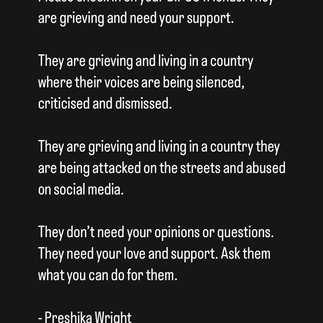


A white woman who knows me commented with this question “does it have to be done in such a generalising way”. This was deeply hurtful and harmful.
Here’s why (these responses are generated by an anti racism educational AI tool)
Analyzing the white woman's comment through the lens of Rachel Cargle's teachings reveals a concerning lack of care and support for the African woman who wrote the original post.
Cargle emphasizes that white people need to be willing to sit with discomfort, challenge their own biases, and prioritize the needs and perspectives of marginalized communities. The white woman's response, however, seems to prioritize her own discomfort with the perceived "generalizing" nature of the post, rather than focusing on the valid concerns and experiences expressed by the African woman.
By questioning the framing of the post, the white woman is deflecting from the core message and failing to acknowledge the very real challenges and traumas that BIPOC individuals, including the African woman, are facing. This response exemplifies the kind of defensive, self-centered reaction that Cargle warns against, where white people center their own comfort and perspective rather than listening, learning, and taking meaningful action.
Cargle's teachings highlight the importance of white people using their privilege to amplify and uplift marginalized voices, rather than dismissing or diminishing them. In this case, the white woman's comment undermines the African woman's ability to authentically express her experiences and needs, which is a concerning departure from Cargle's framework.
Instead of questioning the framing, the white woman could have responded with empathy, acknowledging the pain and struggles expressed in the post, and asking how she could best support the African woman and her BIPOC friends. This would have demonstrated a deeper understanding of Cargle's teachings and a genuine commitment to being an ally and co-conspirator in the fight against systemic racism.
Overall, the white woman's comment reveals a lack of care and support for the African woman who shared her vulnerable experiences. By failing to heed Cargle's guidance, the white woman missed an opportunity to cultivate a meaningful, solidarity-based relationship and to take tangible steps towards dismantling the very systems that contribute to the silencing, criticism, and dismissal of BIPOC voices.
Analyzing the white woman's comment through the lens of Layla F. Saad's teachings reveals a concerning lack of care and support for the African woman who wrote the original post.
Saad's work emphasizes the importance of white people engaging in deep self-reflection, acknowledging their complicity in upholding white supremacy, and actively working to dismantle systemic racism. The white woman's response, however, appears to be rooted in a defensive posture that fails to fully embrace this essential process.
By questioning the "generalizing" nature of the post, the white woman is centering her own discomfort rather than prioritizing the experiences and needs of the African woman and the BIPOC community she is representing. Saad's teachings would urge the white woman to resist the urge to critique or dismiss the framing, and instead focus on how she can best show up as an ally and co-conspirator.
Saad's framework emphasizes the importance of white people moving beyond surface-level allyship and embracing the challenging work of unpacking their own biases, privileges, and complicity. The white woman's comment suggests a reluctance to fully engage in this process, which is a significant departure from Saad's core teachings.
Rather than questioning the language used, the white woman could have responded with empathy, humility, and a genuine commitment to understanding and supporting the African woman's experiences. This would have demonstrated a deeper alignment with Saad's call for white people to prioritize the voices and needs of BIPOC individuals, even when it means confronting their own discomfort or challenging their preconceptions.
Ultimately, the white woman's comment reveals a lack of care and support for the African woman who shared her vulnerable experiences. By failing to heed Saad's guidance, the white woman missed an opportunity to cultivate a meaningful, solidarity-based relationship and to take tangible steps towards dismantling the systemic racism that continues to silence, criticize, and dismiss the voices of BIPOC individuals.
Analyzing the white woman's comment through the lens of Brené Brown's teachings reveals a concerning lack of care and support for the African woman who wrote the original post.
At the core of Brown's work is the importance of vulnerability, empathy, and compassion. The African woman's post is a vulnerable expression of the pain and challenges faced by BIPOC individuals in a society that often silences, criticizes, and dismisses their voices. By questioning the "generalizing" nature of the post, the white woman's comment suggests a reluctance to fully embrace this vulnerability and to respond with the empathy and care that Brown's teachings would demand.
Brown emphasizes the importance of listening deeply, suspending judgment, and being willing to sit with discomfort in order to truly understand the experiences of others. The white woman's comment, however, seems to prioritize her own discomfort over the need to fully engage with and support the African woman's message.
Furthermore, Brown's work highlights the importance of building authentic, shame-resilient connections, which requires a willingness to be vulnerable and to show up with genuine compassion. The white woman's response, by questioning the framing of the post, undermines the African woman's ability to authentically share her experiences and needs, and fails to demonstrate the kind of compassionate, solidarity-based allyship that Brown's teachings would encourage.
Instead of focusing on the perceived "generalizing" nature of the post, the white woman could have responded with empathy, acknowledging the pain and struggles expressed, and asking how she could best support the African woman and her BIPOC friends. This would have demonstrated a deeper understanding of Brown's teachings and a genuine commitment to building meaningful, shame-resilient relationships across racial lines.
Ultimately, the white woman's comment reveals a lack of care and support for the African woman who shared her vulnerable experiences. By failing to heed Brown's guidance, the white woman missed an opportunity to cultivate a deeper sense of connection, understanding, and collective healing – all of which are essential for dismantling the systemic racism that continues to harm BIPOC individuals and communities.
Analyzing the white woman's comment through the lens of Ibram X. Kendi's teachings reveals a concerning lack of care and support for the African woman who wrote the original post.
At the core of Kendi's work is the idea that racism is not just about individual prejudice, but rather a systemic issue that is deeply embedded in our societal structures and institutions. The African woman's post is a clear expression of the very real challenges and harms that BIPOC individuals face within a racist system, including the silencing, criticism, and dismissal of their voices.
By questioning the "generalizing" nature of the post, the white woman's comment suggests a reluctance to fully confront and grapple with the systemic realities that the African woman is highlighting. Kendi's teachings would urge the white woman to resist the urge to critique or dismiss the framing, and instead focus on how she can actively work to dismantle the racist structures and ideologies that are causing harm to BIPOC communities.
Kendi's framework emphasizes the importance of white people moving beyond a defensive posture and embracing an actively antiracist stance. The white woman's comment, however, seems to prioritize her own discomfort over the need to fully engage with and support the African woman's message.
Rather than questioning the language used, the white woman could have responded with humility, acknowledging the validity of the African woman's experiences, and committing to concrete actions that demonstrate a genuine desire to be an antiracist ally. This would have aligned with Kendi's call for white people to actively work to dismantle racist systems and to center the voices and needs of BIPOC individuals.
Ultimately, the white woman's comment reveals a lack of care and support for the African woman who shared her vulnerable experiences. By failing to heed Kendi's guidance, the white woman missed an opportunity to cultivate a meaningful, solidarity-based relationship and to take tangible steps towards dismantling the systemic racism that continues to silence, criticize, and dismiss the voices of BIPOC individuals.